
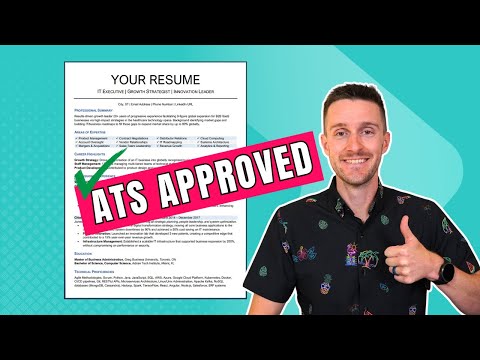
If you’ve ever applied for dozens of jobs and heard nothing back, your resume might not be the problem—you might simply be losing to the system before a human ever sees it. Today, most employers rely on Applicant Tracking Systems (ATS) to sort, scan, and filter resumes. If your resume isn’t ATS-friendly, it can get rejected automatically, even if you’re fully qualified.
The good news? Writing an ATS-optimized resume isn’t complicated once you understand how these systems work. This guide breaks it down in a practical, easy-to-follow way so your resume gets noticed by both software and recruiters.
What Is an ATS and How Does It Work?
An Applicant Tracking System is software companies use to manage job applications. It scans resumes for specific keywords, skills, job titles, and formatting before ranking candidates.
ATS does not judge creativity or design. It looks for relevance.
If your resume doesn’t match what the system is programmed to find, it may never reach the hiring manager’s inbox.
Why Many Resumes Never Pass ATS Screening
Most rejections happen for simple, fixable reasons. Common mistakes include:
- Overdesigned resumes with graphics or icons
- Missing keywords from the job description
- Unclear job titles or section headings
- Using tables, columns, or text boxes
- Submitting the wrong file format
ATS software reads resumes like plain text. If it struggles to read yours, it moves on.
Start with a Clean, ATS-Friendly Resume Format
The structure of your resume matters more than most people realize.
What Works Best
- Reverse-chronological format
- One-column layout
- Clear, standard section headings
What to Avoid
- Two-column designs
- Headers and footers with key information
- Charts, timelines, or visual skill bars
Simple doesn’t mean boring—it means readable.
Use Job Description Keywords the Right Way
Keywords are the backbone of an ATS-optimized resume. These systems are programmed to look for the same language used in the job posting.
How to Identify the Right Keywords
- Look for repeated skills and tools
- Note required qualifications
- Pay attention to job titles and role-specific terms
Example
If the job description mentions “data analysis and reporting,” your resume should reflect that exact phrasing where relevant—not vague alternatives.
The goal isn’t copying blindly, but matching your experience using the employer’s language.
Write a Resume Summary That Works for ATS and Humans
Your resume summary should quickly explain who you are and what you bring to the role—without fluff.
Example of an ATS-Friendly Resume Summary
Detail-oriented operations manager with over six years of experience improving workflows, managing teams, and reducing operational costs in fast-paced environments.
Keep it short, focused, and aligned with the role you’re applying for.
Build a Strong, Keyword-Focused Skills Section
ATS software often scans the skills section first, so this part deserves special attention.
Example
- Project Management
- Data Analysis
- Customer Relationship Management (CRM)
- Microsoft Excel
- Process Improvement
Use exact terms found in the job listing whenever possible. If the employer writes “CRM software,” don’t replace it with something vague like “client tools.”
Turn Work Experience into Measurable Results
Listing duties isn’t enough. Both ATS and recruiters prefer achievement-focused experience.
Example
Operations Coordinator
ABC Company | 2020 – Present
- Improved reporting accuracy by 30% through process optimization
- Coordinated cross-department projects to meet tight deadlines
- Supported management with data-driven decision-making
This approach shows impact, not just responsibility.
Stick to Standard Resume Headings
ATS systems are trained to recognize common resume sections. Creative titles may confuse the software.
Use These Headings
- Professional Summary
- Work Experience
- Skills
- Education
- Certifications
Avoid unique headings like “What I Offer” or “Career Story.”
Choose the Right File Format
File type matters more than many job seekers realize.
Best Formats
- Word (.doc or .docx) – safest option
- PDF – only if the job posting allows it
Avoid scanned resumes or image-based files, as ATS systems can’t read them properly.
Keep Fonts and Design Simple
ATS software prefers clarity over creativity.
Safe Font Choices
- Calibri
- Arial
- Times New Roman
Stick to black text on a white background and keep font size readable. A clean resume looks professional and passes ATS filters more easily.
Customize Your Resume for Every Application
One of the biggest job search mistakes is sending the same resume everywhere. ATS systems reward relevance.
How to Tailor Your Resume
- Adjust keywords for each role
- Reorder skills based on importance
- Modify your summary to match the job title
Even small changes can dramatically improve your success rate.
Test Your Resume Before Applying
A quick test can save you from instant rejection.
Simple ATS Check
- Copy your resume into a plain text editor
- Make sure everything is readable
- Confirm keywords are present
- Check for spelling and formatting errors
If it reads cleanly in plain text, it’s likely ATS-friendly.
Final Thoughts
Writing an ATS-friendly resume that gets noticed is less about tricks and more about clarity, relevance, and alignment. When your resume speaks the same language as the job description and is easy for systems to read, your chances improve immediately.
Think of your resume as a bridge—one side is technology, the other is a human recruiter. When you write for both, interviews follow.